
Citrus County Arrest Feed Windows
The Citrus County Sheriff's Office Recent Arrest page is the place to begin. It links a PDF covering arrests from the past ten days. Think of it as a rolling window, not a live jail roster or a lasting archive. The report can also lag behind the current date. When a name is missing, the file may simply not have refreshed yet. An entry may have aged out. The record could be exempt. The person may sit in a different custody system entirely. Citrus County splits the publishing role from the detention role. CCSO puts out the arrest report. CoreCivic runs the Citrus County Detention Facility in Lecanto. That split matters when timing counts. Use the PDF to document a recent arrest, the facility or Florida VINE for present custody, and the Clerk's SCORSS system for the court result.
| View | Actual scope | Best use |
|---|---|---|
| Arrested Today | No separate official 24-hour endpoint was found | Check the PDF’s end date, then use custody fallbacks for a fresh booking |
| Arrest Reports | Official rolling ten-day PDF | Read the multi-day charge and bond rows |
| VINE Arrest Check | Covered custody records and alerts | Track one person’s status, release, or transfer |
Timing matters: Citrus County recent arrests carry no hourly refresh and no guaranteed same-day posting.
Who Was Arrested Today?
For a booking that may have happened today or overnight, open the CCSO page and read the ending date on the linked report. Then search the PDF for a name or AR number. Stop if the report ends before the arrest date. No result there is not proof that no booking occurred. For facility questions, call the Citrus County Detention Facility at (352) 527-3332, or check Florida VINE for custody information. The sheriff also maintains an official app. Its Google Play listing and the Apple store page describe it as a department-information channel. The app is not a booking feed. It carries no promise of every arrest or photograph. The ten-day PDF stays the official published arrest path. A formal CCSO records request is the fallback for a report or booking photo.
The app can help you reach sheriff information. Its presence does not create a live Citrus County jail roster, though.
Citrus County Jail Roster Reality
CoreCivic publishes no public, searchable custody roster for Citrus County. Florida's county-jail directory names the facility. But it offers no inmate-search link. So the ten-day arrest PDF serves as the practical online county list. Remember, it logs arrest events rather than proving who is still in custody. A booking image may appear in the Photo cell. Some cells are blank or read "None."
| Search clue | How Citrus uses it | Do not confuse it with |
|---|---|---|
| Name | Find a person in the CCSO PDF | Proof of identity without DOB and date checks |
| AR number | Reference one sheriff arrest record | A Clerk case number or FDC DC number |
| Date | Shows the report’s arrest date | Posting, release, or disposition date |
| Arrest type | Explains felony, misdemeanor, warrant, writ, or court-borrow context | A final conviction |
| Bond | Amount entered for a charge row | Proof that bond was paid or release occurred |
Use a short verification sequence. Open the report and confirm its date range. Match the name, date of birth, AR number, and arrest type. Treat repeated AR-number rows as multiple charges against one person, not several people. For current custody, contact CoreCivic or test Florida VINE. For the case outcome, search the Clerk. That approach keeps four different questions from collapsing into one short-lived file.
- Booking
- The intake process that records identity, alleged charges, and custody details.
- Bond
- A court-set release condition, not evidence that release occurred.
- Disposition
- The court’s later resolution of the charge.
- Detainer
- A request from another authority affecting custody or release.
Where Citrus Arrests Get Published
Let official channels lead every search. Secondary publishers have their uses. A site may preserve a post after the county page changes. But secondary sources can omit entries. Some mislabel a city. Others lag behind the arrest record. The Citrus County Chronicle adds reporting and dated arrest digests. The Fifth Judicial Circuit State Attorney's newsroom can document later outcomes in selected cases.
| Channel | Official? | Coverage and photo note |
|---|---|---|
| CCSO Recent Arrest PDF | Yes | Ten-day county report; Photo cell may be blank |
| CoreCivic / Florida VINE | Yes | Custody or alerts; not a mugshot gallery |
| Clerk SCORSS | Yes | Docket and disposition rather than booking photos |
| FDC Offender Search | Yes | State prison or supervision profile; photo may appear |
| Chronicle Crime & Courts | No, news | Dated county stories and digests; may be paywalled |
| BustedNewspaper, RecentlyBooked, Mugshots.com, Arrests.org | No | Unofficial county pages with separate update and retention practices |
Mugshots.com's Citrus archive shows the older secondary layer at work. It can help locate a dated lead. Every detail should still be checked against CCSO and the Clerk.
Citrus County Arrests by City
Citrus County has two incorporated cities, and CCSO polices both. Inverness Recent Arrests covers the county seat's sheriff contract and the county booking route. Crystal River Recent Arrests explains the sheriff station at City Hall and why the official record still moves through county systems. Neither city runs its own arrest feed. An arrest location is not a custody location. A person arrested in either city gets booked at the Citrus County Detention Facility in Lecanto. Search the county PDF first. Then use CCSO Records for a report or photograph. Countywide publishers and news outlets may attach a city label, but compare that label against the official arrest record before trusting it.
Citrus County Arrest Record Fields
The CCSO report is a charge table, not a narrative case file. Each field answers one narrow question. Several offense rows can share a single AR number. Counting lines may overstate the number of people arrested. The name and date of birth identify the subject, though the report may omit a home address or later corrections. The court docket carries its own case number and controls the legal outcome.
| Field | What it shows |
|---|---|
| Photo | A booking image when displayed; blank does not prove no photo exists |
| AR # | CCSO’s local arrest/report identifier |
| Date | The arrest/report date shown by the sheriff |
| Arrest Type | The basis or category entered, including warrants or writs |
| Offense | Statute/code and short charge description as booked |
| Name / DOB | Identity fields that must be checked together |
| Bond | Amount tied to that row, not confirmation of payment |
A Citrus County arrest record captures what booking logged that day. Expect a name, the date, the charge, and an AR number, all filed under Florida public records law.
Citrus Arrest Mugshots and Photos
A booking photo gets taken at intake in Citrus County. It may then appear in the Photo column of the short-term CCSO arrest report. A blank cell is common. It can mean the image was withheld, reformatted, or never posted, and it says nothing about who is still in custody. Custody status is a separate question. For an older or missing photo, give the sheriff's records custodian the subject's name, an approximate date, and the AR number.
The picture changes after a state sentence. Once someone moves into state prison or supervision, the Florida Department of Corrections Offender Search becomes the right state system. Its profile image comes from FDC, though, not from the original Citrus booking file. The federal Bureau of Prisons locator shows no photo field. ICE runs a separate locator.
Unofficial sites copy arrest material too. BustedNewspaper, RecentlyBooked, Mugshots.com, and Arrests.org each run under their own rules, and a photo that stays up does not mean the person is still jailed. Dates there can drift. Mugshots.zone lists no Citrus-specific section in its directory.
Request a Citrus Arrest Record
Kim Helms, the Supervisor of Records, serves as CCSO's custodian. The records desk sits at 1 Dr. Martin Luther King Jr. Avenue, Inverness, FL 34450. The desk number is (352) 341-7414. Email publicrecords@sheriffcitrus.org or file the official request form. Questions about a pending request go to (352) 341-7450, and while a written request is optional, precise facts help staff locate the record and price the copy.
- Collect the full name, approximate arrest date, incident location, and AR number if known.
- Ask specifically for the arrest report, booking record, or “booking photograph.” Do not ask the custodian to research a broad topic.
- Submit the CCSO public-records form, email, or contact the records desk.
- Review the estimate. Ordinary pages are listed at $0.15 single-sided or $0.20 double-sided; a photograph is $1.00, and extensive labor, redaction, technology, certification, or postage can add cost.
- Allow for review. CCSO says requests cannot be completed the same day and may take up to 30 business days or longer based on scope and legal deadlines.
The official form is the fallback once an arrest record leaves the public PDF.
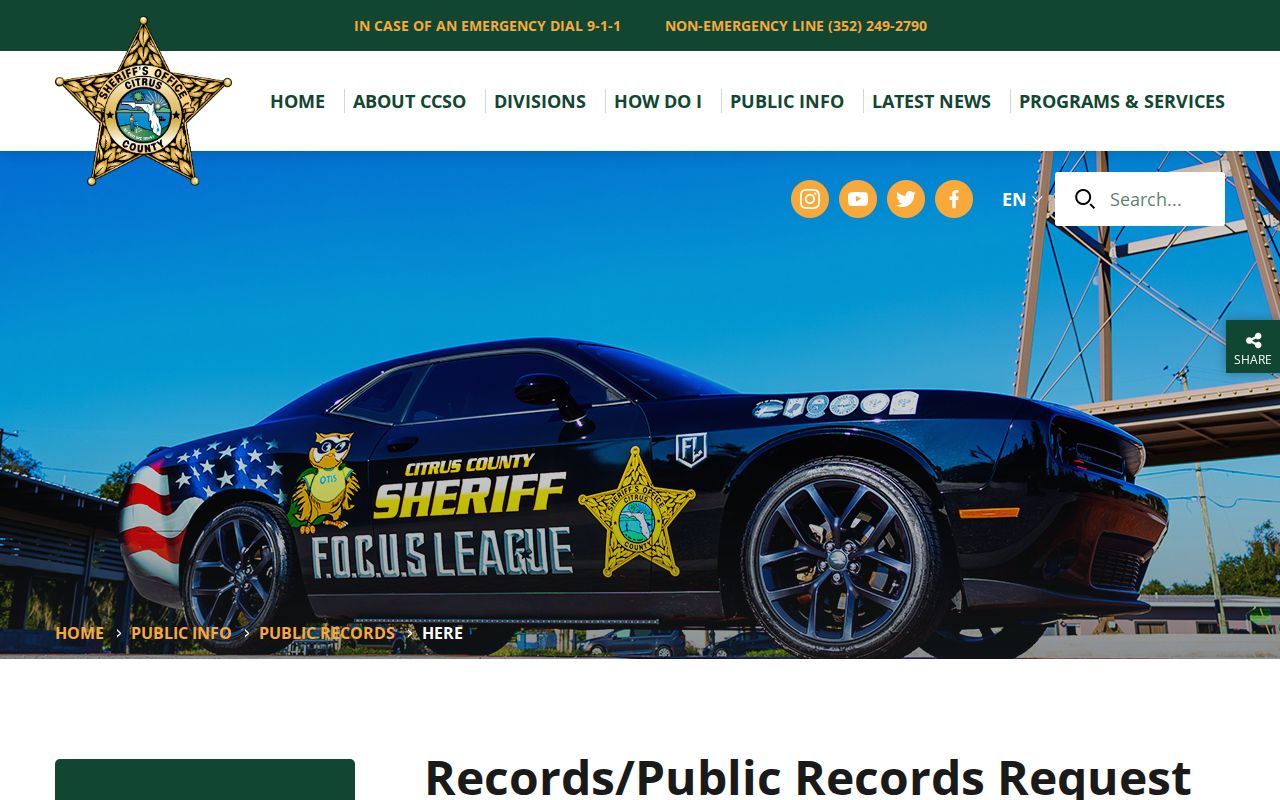
Details matter when you ask. A full name, a birth date, and an AR number cut down matching errors and help the custodian locate the right booking material.
Florida Chapter 119 opens many records and closes some. Active investigative material, juvenile information, victim data, and other protected content may be withheld or redacted under its exemptions. CCSO may not hold it. Ask whether CoreCivic is the actual custodian. Outcomes belong to the Citrus Clerk.
Florida Arrest Photo Law
Florida Statutes §901.43 takes aim at commercial mugshot publishers. It targets those that charge a fee for removal. When its conditions apply, a written request triggers a no-fee removal duty within ten calendar days. The request must identify the photograph. It must also be sent by the method the statute specifies. Scope matters here. It does not erase every PDF. The statute targets solicited fees, not government records, news articles, or other accurate public material.
Sealing or expungement is a different path. The FDLE certificate process lists a fee of $75, nonrefundable. A complete packet takes about 12 weeks. There is no expedited service. The Citrus Clerk then handles the local petition. A $42 filing fee applies, plus stated copy and certification charges. Eligibility depends on the case. A certified court order may need to be served on each agency. It may also need to go to independent publishers.
Some publishers offer free routes for copied records. BustedNewspaper, RecentlyBooked, and Mugshots.com each publish documentation-based correction or removal processes. Policies change, and outcomes vary. Citrus County Busted posts no stand-alone policy of its own. Keep the source URL, your request, proof, and delivery record. Never pay a business promising a guaranteed shortcut.
The RecentlyBooked policy page shows one publisher's free process in action.
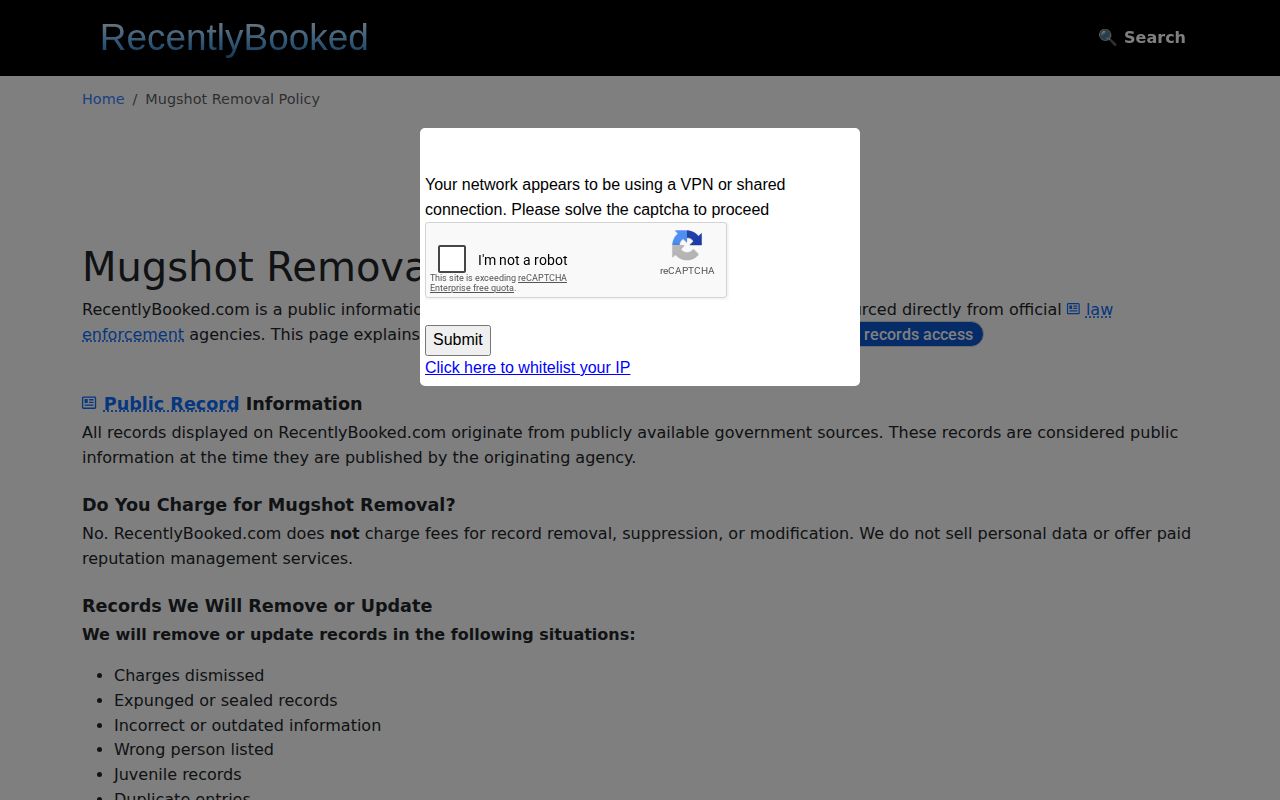
Publisher policies operate separately from CCSO records, court relief, and Florida’s statutory requirements.
When Citrus Arrests Age Out
The ten-day web window is not a destruction schedule. Florida's GS2 records schedule keeps booking records and release lists for at least one year after release. Agencies can hold them longer. A case, an audit, a litigation hold, or a contractor arrangement can change the actual path. Ask the custodian where the specific series lives rather than assuming a missing web row was erased.
For a court outcome, SCORSS and the Clerk's request process are the direct local route. The Clerk's online index covers 1980 to the present. Older material may sit on paper or microfilm. The Old Courthouse Heritage Museum and State Archives serve history, not live custody checks. A newspaper archive can preserve a report long after the booking page moves. An archived story proves publication only.
Why Citrus Arrest Records May Be Withheld
A thin search result is not always a breakdown. CCSO points to active criminal investigative records, juvenile information, victim data, and other statutory exemptions that can limit access. A custodian has options. You might get an inspected record, a redacted copy, an exemption explanation, or a referral to the office that holds the item. When material is withheld, ask for the statutory basis.
Warrants sit behind a separate wall. The Clerk excludes active warrants, capiases, active orders for arrest, and writs of bodily attachment from public online view. A third-party wanted page is not official confirmation. The real check runs through the sheriff, the court, or an attorney. Use safe official channels.
Citrus Arrest Warrants and Wanted List
Warrants stay mostly behind the clerk's counter in Citrus County. Under Florida court-access rules, the Citrus Clerk keeps these papers off its website. Active warrants, capiases, orders for arrest, and writs of bodily attachment stay unpublished there. SCORSS still supplies public docket data. Worried about your own status? Use an attorney or the court's own process. For general questions, the sheriff's non-emergency line is (352) 249-2790.
Statewide leads come from other places. The FDLE Wanted Persons search gathers agency-reported entries across Florida. FDLE cautions that a hit does not confirm a warrant is still active. Nor should anyone act on a match alone. Locally, Citrus County Crime Stoppers keeps a searchable list of wanted suspects. Anonymous tips go to 1-888-ANY-TIPS, a secure web route, or the P3 app. Never approach a listed person yourself. Call 911 if the threat is immediate. The Citrus County Crime Stoppers wanted page displays the partner-hosted public-safety interface.
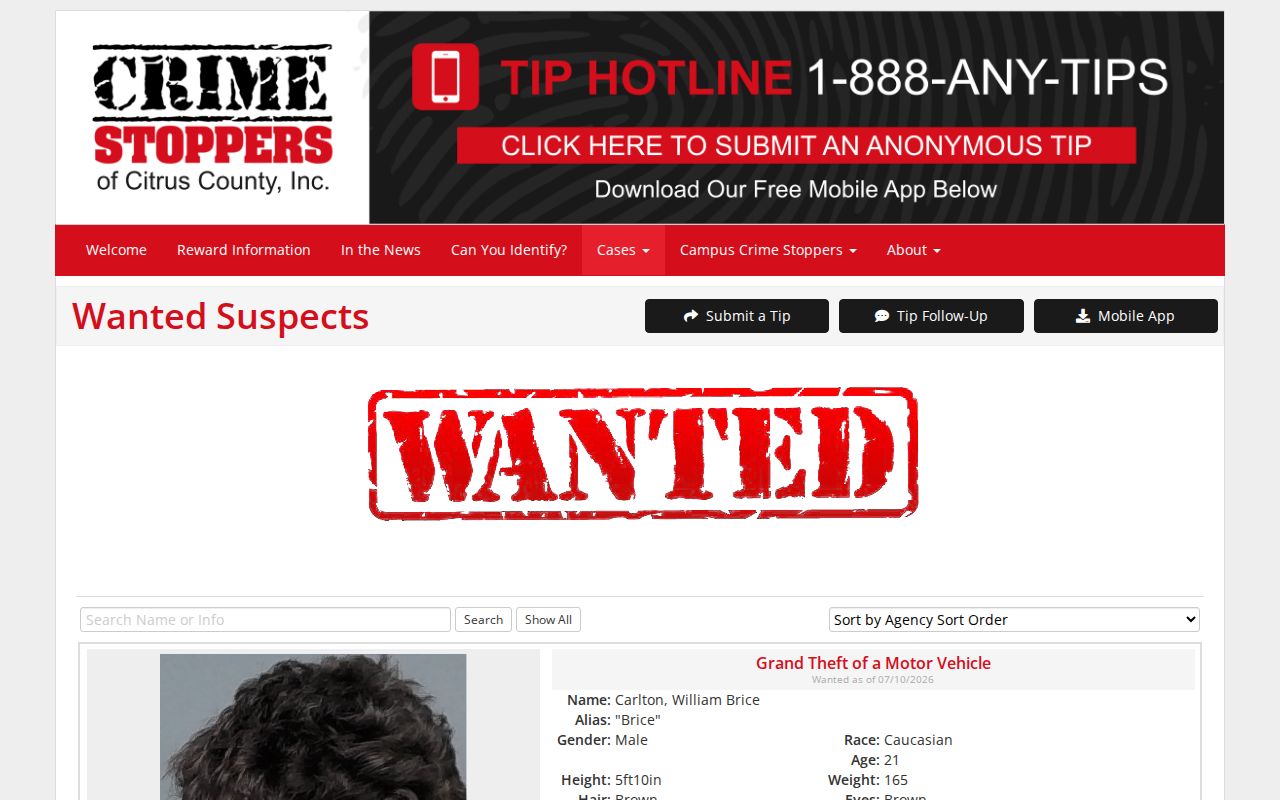
The sheriff's wanted list changes often and stays selective. It is not a full warrant database.
After a Citrus County Arrest
Booking opens the record. The case itself moves through first appearance and arraignment in court. The Clerk's SCORSS search then picks up the trail. It shows filings, hearings, case numbers, and dispositions that never touch the sheriff PDF. A disposition is simply the court's outcome. It answers what the judge did. The arrest report captures the arrest; the Clerk shows where the case went from there.
The SCORSS interface is the official Citrus court follow-up after an arrest. It takes over where the sheriff publication ends.
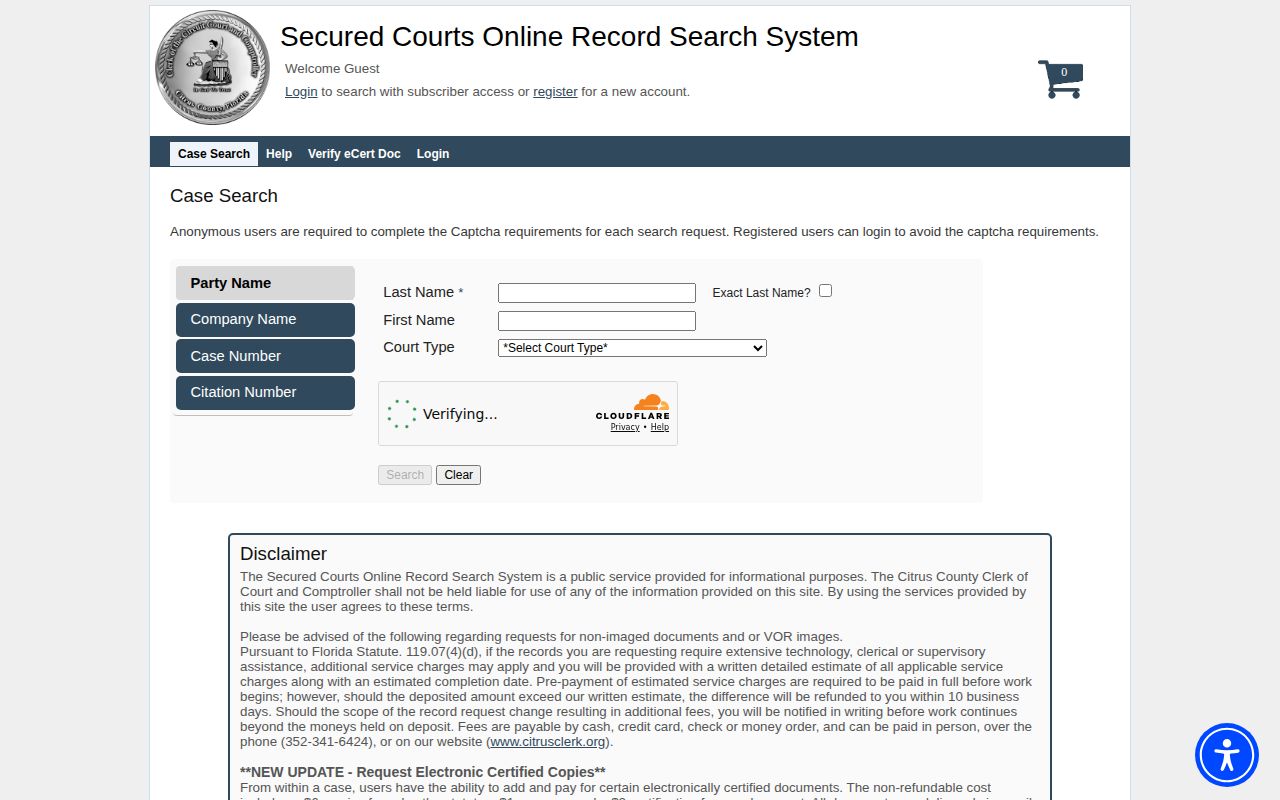
Use the Clerk case number for any court follow-up, since it differs from the sheriff's AR number. Bond takes the same care. An amount listed in a charge row does not prove money was posted, a release condition was met, or the person left custody. CoreCivic or VINE answers whether someone remains in custody today. The Clerk shows what happened in court. The sheriff report simply preserves the booking entry for its publication window.
Citrus Custody Beyond County Jail
One jail roof can cover several legal authorities. A Citrus County pretrial booking lives with CCSO, CoreCivic, and Florida VINE. Prison sentences and state supervision move a person into FDC's offender databases, which filter by name, DC number, alias, and photo. An FDC result still does not replace the county arrest report or the Clerk disposition.
Federal custody runs on separate tools. The Bureau of Prisons locator covers federal prisoners. It offers no public booking-photo field. The ICE Online Detainee Locator covers immigration detention through exact-name and identifying-number rules. The Marshals Service may hold people through contract facilities. It publishes no general public locator.
Citrus Arrest Data and Trends
Numbers tell a different story. The FDLE county-detention arrest dashboard adds a statistical layer the person-level CCSO PDF lacks. Visitors can filter and export adult county detention booking data from participating agencies. FDLE refreshes the view daily. Transmitted data runs through the prior day. Coverage, however, is not guaranteed complete. Treat-as-adult records can slip in, so context matters.
Annual county and municipal arrest tables answer yet another question. They support trend work by year and agency. They cannot identify who is now in the Citrus County Detention Facility, prove a single arrest, or hand over a booking photograph. Match each tool to its job: dashboard for patterns, CCSO report for a dated arrest event, CoreCivic or VINE for custody, SCORSS for the court result.